Preparing buffers? Try Buffer Calculator
AI Steps Into Chemistry Labs
June 5, 2026 — In a first-of-its-kind test, researchers at Anthropic have put their AI, Claude, to the challenge of interpreting NMR spectra—one of chemistry’s most complex and time-consuming analytical tools.
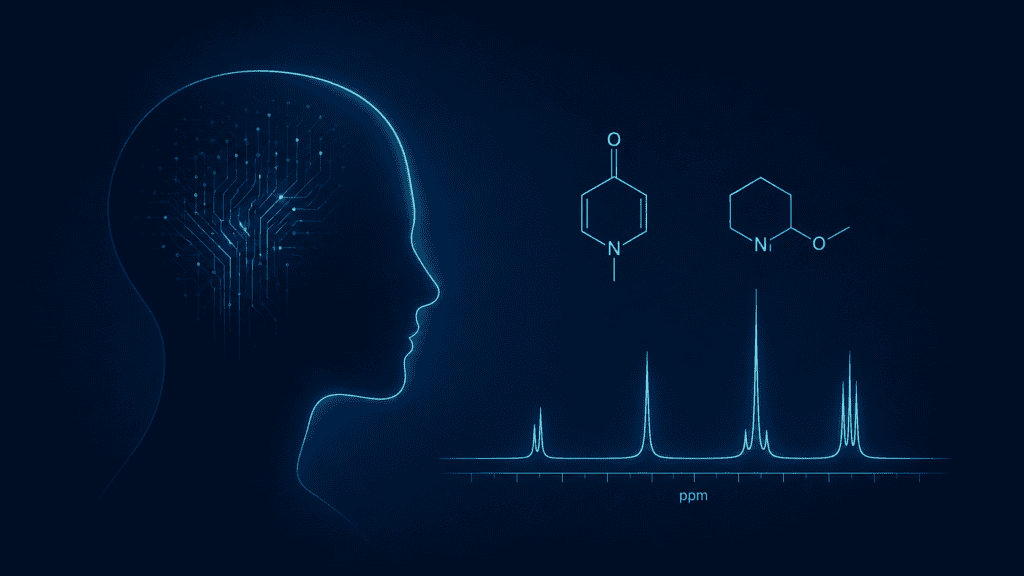
Traditionally, chemists painstakingly match peaks in a spectrum to atoms in a molecule, a process that can take hours for a single compound. Now, Claude, a general-purpose AI model, has shown it can perform this task with accuracy comparable to industry-standard software like ChemDraw and MestReNova.
In the study, Claude analyzed 20 newly published compounds, predicting the positions of hydrogen and carbon peaks in 1D NMR spectra. Its top-performing model, Opus 4.7, achieved an average error of just ±0.079 ppm for hydrogen, outperforming other AI and classical tools. Notably, it also excelled at inverse prediction—proposing molecular structures from spectra alone—something traditional software struggles with.
Experts say this marks a significant step toward AI-assisted chemistry, potentially saving researchers countless hours in the lab. Limitations remain, particularly with complex molecules and certain solvents, but the promise is clear: AI may soon become an indispensable lab partner.
For more information, Anthropic plans to release a full white paper detailing Claude’s performance and methodology.